-
There’s a simple way to support safeguarding your hearing according to qualified audiologist, Melissa Chandler.
“Protecting our ears is the best form of prevention,” says Chandler.
“Keeping check on the volume we expose ourselves to will ensure that any preventable hearing loss is avoided.”
If you want to know how to help prevent hearing loss, you must first understand the relationship between decibels and sound.
What are decibels?
Decibels, also known as ‘dB’, is the measure of sound between soft and loud. Chandler notes that it operates differently to other measurement scales.
“The scale is a logarithmic scale, rather than a linear scale, so this means that a small increase in decibels can be a big increase in sound energy,” she explains.
“In fact, every 3dB is a doubling of intensity.
“This is one of the reasons [why] increasing noise levels carry risk to hearing, as we may think we are not increasing the level by much as far as numbers on the scale go, but we really are.”
High decibels can play role in tinnitus, which is often a sign there may be damage to the inner ear.
Loud noise and hearing loss
Exposure to high decibels may result in tinnitus, but what is it?
“Tinnitus is the experience of hearing a sound that is not coming from the outside world,” says Chandler.
“It is often experienced as a ringing, buzzing, hissing, humming or whooshing noise and felt either in the ears or like it is somewhere in the head.”
Tinnitus affects people differently, but it may be a sign of damage to your hearing.
“It can be a temporary experience randomly, or after loud sound exposure, or it may be something that you notice whenever you are in a quiet enough space that it is not drowned out by the sound around you,” says Chandler.
“It is usually an indication of damage to the inner ear, and not a sign of anything more sinister, but if it is persistent, one-sided, pulsing, or linked with a sudden drop in hearing or dizziness, it is important to seek professional or medical advice without delay.”
High decibels are everywhere in the world and Chandler notes that it’s wise to be aware of the time you spend around loud sounds.
“The safe time depends on both volume and duration: the louder the sound, the less time your ears can tolerate it safely,” says Chandler.
“Workplace health and safety guidance treats 85dB over an 8-hour workday as the safe limit, and anything longer or louder than this exposure becomes hazardous.”
Is there a safe distance from high decibels?
“There is no single “safe distance” but to reduce the sound by 6dB you need to double your distance away from it,” says Chandler.
“If you need to raise your voice to talk to someone at arm’s length due to loud sounds around you, then you probably need to move away from the loud sounds or turn them down.”
Chandler also notes that there’s many common places where decibels reach high levels.
“Higher-than-normal decibel levels are… concerts, nightclubs, sporting events, bars, cinemas and even gyms,” she says.
“Power tools, lawnmowers, leaf blowers, motorcycles, sirens, fireworks, and guns all produce excessive levels of sound that can be damaging.”
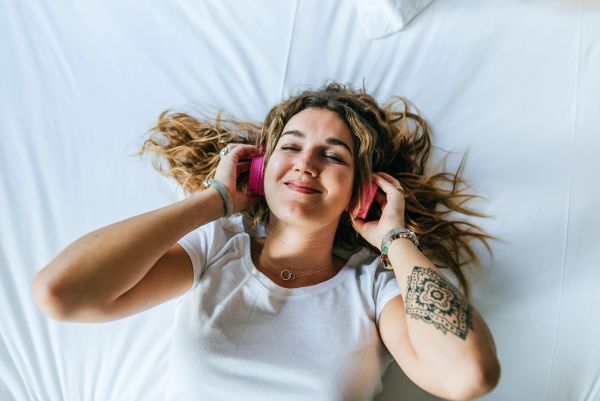
Headphones are a common way to enjoy listening to music or podcasts, but Chandler points out that there can be risks to your hearing associated with headphones.
“Personal headphones can also become risky if used at too high a level or for too long a period,” she explains.
“The general rule of thumb for safety here is that if the person next to you can hear the music from your earphones, then you need to turn them down.”
Tips to prevent hearing loss
The most effective way to help prevent hearing loss is to keep sounds at a safe decibel level.
“Keep sounds below the 85dB mark is the safest,” says Chandler.
Sounds that range between 70 – 85db include a loud conversation or heavy traffic.
To compare, a lawnmower or chainsaw sits between 90 – 100db.
But what if you can’t control the sounds around you?
Hearing protection may help to "manage exposure to loud sounds but must be worn correctly for maximum impact,” says Chandler.
Hearing protection for children
It’s important for parents and carers to think about hearing protection for children as they grow.
“The same rules apply to kids’ ears,” says Chandler.
“Limiting headphone and device volume is a big one these days, and most devices allow you to set a maximum level for headphones in the settings.
“Also making ear protection a normal part of being around loud sounds, for example if in the garden while lawn mowing is going on is a great way to set up good habits for life.”
Temporary hearing loss
If you spend a long time exposed to high decibels without hearing protection there may be side effects.
“Temporary hearing loss can be caused after exposure to loud sounds such as attending a loud concert,” says Chandler.
“The loud noise can temporarily stress or fatigue the tiny hair cells in the inner part of our ear, and they will not transmit the signal to our brain as effectively as usual.
“This can recover with rest; however some damage will still have occurred to the ear, and repeated experiences will contribute to longer-term permanent damage.”
What if temporary hearing loss persists?
“Usually, any temporary impact on hearing would resolve within a day or so,” says Chandler.
“But if this is not the case, it is important to see a GP or hearing care professional urgently to ensure the loss does not become permanent.”
How hearing loss can affect your health
The world is wired for sound and Chandler notes that the broad impact of hearing loss on the overall health and wellbeing of a person can’t be underestimated.
“Hearing loss affects far more than just our ears,” says Chandler.
“It can impact our relationships, our confidence, it adds to our cognitive load and can lead to isolation and withdrawal from social activities.”
If you’re concerned about your hearing, talk to your GP or book a hearing test.
“We recommend a hearing check every 12-24 months, or as soon as any signs of hearing difficulties are noticed,” says Chandler.
How to prevent hearing loss
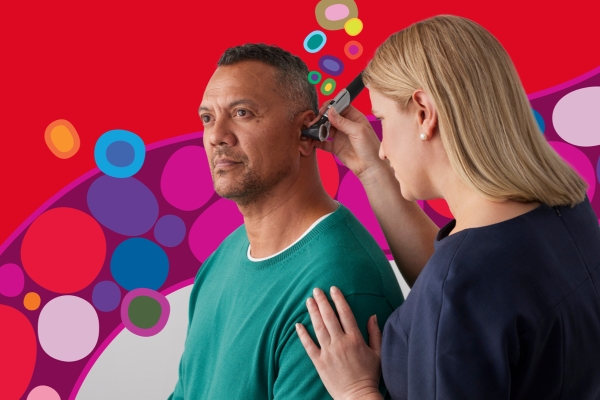
Introducing Specsavers Audiology
Did you know that Specsavers Audiology is now part of Medibank's Member Choice Advantage network? Learn more about our Specsavers Audiology offer.
Frequently asked questions
What is the safe decibel level?
“Keep sounds below the 85dB mark is the safest,” says Chandler.
What is the safe decibel level at work?
“Workplace health and safety guidance treats 85dB over an 8-hour workday as the safe limit, and anything longer or louder than this exposure becomes hazardous” says Chandler.
Can hearing loss be reversed?
“Some hearing problems can improve if the cause is treatable, such as wax blockage, or the result of an ear infection,” says Chandler.
“However, hearing loss due to excessive noise, or due to ageing is usually permanent and not reversible.”
What is the 60:60 rule?
“The 60:60 rule is a simple listening habit: keep personal device volume at no more than about 60% of maximum and take a break after around 60 minutes of listening,” says Chandler.
“It is not a guarantee of safety in every situation, but it is a helpful rule of thumb to reduce risk.”
Our expert: Melissa Chandler
Melissa Chandler (BSc DipAud MAudA MACAud CCP) is a qualified Audiologist and also the Professional Services Manager for Specsavers Audiology.
-
Donating blood saves lives
A first-hand account of donating blood, including how to do it and who is eligible.
-
How your pet boosts your mental health
We spoke to a psychologist about how pets can help support your mental health, from reducing stress to giving us a sense of purpose.
-
How to help boost your immune system
We ask a doctor to break down the role the immune system plays in the body, and how sleep, stress management, exercise and diet can help to boost the immune system.
-
How gratitude makes you happier and healthier
Practising gratitude is a simple way to support your wellbeing. Explore the benefits and how to practise gratitude daily.
-
Food for sleep
A dietitian explains the role tryptophan and melatonin play in the body, the best foods to improve the quality of your sleep and what not to eat before bedtime.
-
The many benefits of volunteering
When you volunteer, the good doesn't stop there. Research has found that those who give their time for something are usually happier and healthier than those who don’t.





How we reviewed this article
This content was reviewed by a Medibank healthcare professional. Medibank has strict sourcing guidelines and relies on peer-reviewed studies and information from Australian government and health peak bodies.