Alongside brushing and flossing, a professional check-up and dental clean should be an essential part of your oral hygiene routine. But how regularly should you be visiting the dentist’s chair?
For most people, dentists recommend a routine check-up and clean every six to 12 months. However some may need more frequent visits, depending on their risk of tooth decay, gum disease, dental work, medical history and home care routine.
How often should you get your teeth cleaned by a dentist?
Medibank Members’ Choice Advantage dentist Dr Jonathan Cichero says the best schedule for professional tooth cleaning is the one recommended by your dentist.
“As a guide, twice a year for an examination and a clean of the teeth and gums is appropriate for the majority of the population,” he says.
However, it’s important to note everyone’s situation is different.
“Every patient and every mouth is individual. Many patients have complex medical issues or underlying conditions that might dictate more frequent cleaning and maintenance, while others may not need supervision as regularly,” Dr Cichero says.
Dr Cichero adds that any changes to your teeth and gums might be a sign to get a dental check-up.
“If you notice a change, get it checked by your dentist,” he says. “Unfortunately, things can change without us knowing, so regular monitoring can help catch any changes early, and minimise any problems,” he says.
READ MORE: Signs you should see a dentist
What happens during a dental clean?
Professional teeth cleaning involves removing built-up debris from your teeth, such as food particles, soft plaque, and hard calculus (also known as tartar) which is hardened plaque. Both plaque and calculus can cause gum disease.
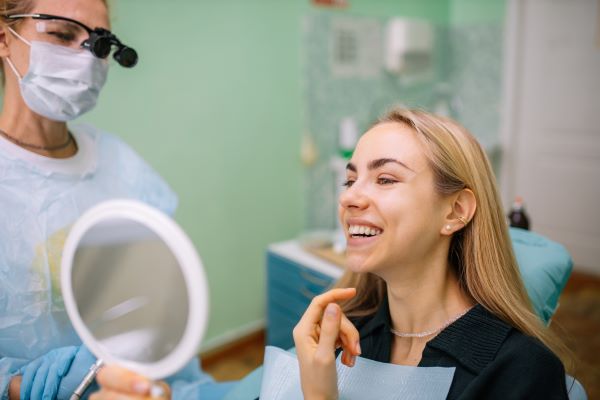
“Every clinician will make their own decision on how they will proceed for each patient, depending on how long it has been since the last visit, what your medical history contains, or any specific reasons for coming,” says Dr Cichero. “However, most cleans will involve a thorough review of the entire mouth including tongue, cheeks and palate, there will perhaps be some x-rays to determine if there are issues underneath that are not immediately obvious, and finally a check on each tooth for perhaps wear, fractures or decay.
“If only a cleaning is recommended, we will often use a tool which vibrates and washes the teeth at the same time to knock off any built-up calculus or tartar. Some clinicians may then use finer instruments to refine the surfaces of the teeth and ensure all the calculus has been removed.
“Finally,” he says. “Most cases will receive a polish to remove any staining and smooth the surfaces of the teeth, before a final application of fluoride.”
Who may need more frequent dental cleans?
Dr Cichero says certain groups of people may require more frequent dental appointments. These include people who:
- have been diagnosed with diabetes
- smoke cigarettes or use vapes
- suffer from ‘dry mouth’
- have dentures, crowns or veneers.
“All of these conditions can cause changes to your mouth in a very short time,” he says. “For example, smoking and vaping dries out the mouth. A dry mouth allows bacteria to flourish, and a patient has a significantly increased risk of dental decay, gum disease leading to bone and tooth loss. So potentially these patients may need more frequent monitoring.”
Dr Cichero adds that patients with complex dentistry like veneers, crowns and implants, should also consider extra cleans and visits to their dentist or orthodontist.
“You could see some expensive work fail if it is not maintained both at home and by your dental team. Frequent checks and maintenance may help your dental work last,” he says.
How often should children get a dental check-up?
The Australian Dental Association (ADA) recommends children have their first dental check when their first teeth appear, which is usually before or around their first birthday.8
After that, toddlers and young children should have their teeth checked every six months, or at least every 12 months, while they’re growing.9

Here’s something to smile about.
Show us your pearly whites! Members with eligible extras cover get 100% back on up to two check-ups each year at a Members’ Choice Advantage dentist.^
Why are regular dental check-ups important?
Regular check-ups may identify any risk factors early, so preventive strategies can be put in place.
Early detection of issues like tooth decay or gum disease may also make treatment easier.
Your dentist can also check for concerns such as whether you need replacement fillings or repair, and if any bad habits such as teeth grinding or smoking are causing issues.
“Our mouths, gums and teeth are the front-door to our bodies, and our entire health is affected by what we let through,” says Dr Cichero. “Making sure this entrance is in the best condition possible can help our overall health. So if we want our whole body to be healthy, it starts with regular maintenance and cleaning of our teeth and gums.”
“The clinical team, including oral health therapists, dental assistants and dentists, are all looking closely when you come for a check-up,” Dr Cichero adds. “Two sets of eyes and sometimes even more, are looking for anything that doesn't look normal.”
What are the risks of not having your teeth regularly cleaned?
Even if you’re an expert brusher and flosser at home, a professional clean with a dentist is still necessary. Plaque can build up in difficult to reach corners of your mouth and solidify over time, causing calculus (also known as tartar). Calculus typically requires professional removal and left untreated, can lead to tooth decay, cavities and gum disease.
“We (should) all clean our teeth regularly at home, at least twice per day,” Dr Cichero says. “But even this does not stop some build-up occurring that simply can't be removed with a toothbrush. This is where the dental team does the work that you can't do yourself.
“Removal of calculus or tartar is required to stop damage to the gums and bones around teeth. If the gums and bones supporting teeth are destroyed, then teeth can get loose, develop infections underneath and may eventually need to be pulled out.”
“If you avoid seeing your dental team for cleans, it may put your mouth at risk, because no matter how good you are at home, there is always something left behind.”
How much is a dental clean?
At a Members’ Choice Advantage dentist, the national average cost of a dental check-up and clean is $270 and if you visit twice a year, you could be spending around $540. With eligible extras, you can get 100% back on up to two check-ups on top of your annual limits at a Members’ Choice Advantage dentist (excluding Healthy Living Extras and Gold Ultra Health members).=
Find out more about dental cover.
How do I find a Medibank Members’ Choice Advantage dentist?
If you’re a Medibank member with extras cover, you can search for your closest Members’ Choice Advantage dentist using our Find a Provider tool.
Frequently asked questions
Is a dental clean every 6 months necessary?
It’s advised most people get dental check-ups every six to 12 months. Continuing these check-ups throughout your life supports good oral health hygiene, and potential problems with tooth decay and tooth erosion can be identified early on. Your dentist can advise you on the ideal frequency for your specific situation. Babies should have their first appointment around 12 months old, or when their teeth start to come through.
Can I remove tartar from my teeth at home?
No, you can’t remove tartar safely at home, as once it’s hardened onto the teeth, it needs to be removed by a professional. A dentist, or a dental hygienist, removes tartar with professional cleaning tools and often uses a process called scaling.
What happens if you don’t clean your teeth?
If you don’t clean your teeth regularly, there will be an accumulation of plaque on your teeth, which can turn into tartar (or calculus) and increase the risk of tooth decay. It’s also important to go for regular dental check-ups so your dentist can check each tooth, your gums, tongue, lips, cheeks and palate. Your dentist might suggest an x-ray, and will explain any further treatment recommendations.
What is a dental filling?
Dental fillings are an option for dentists and orthodontists to treat tooth decay that has caused a hole in the tooth. This is known as a cavity. A filling, which can be made from a variety of materials, fills that hole after it has been cleaned. It is then dried and sealed.
Our expert: Dr Jonathon Cichero
Dr Jonathan Cichero is a senior clinician with more than 30 years’ experience in Dentistry. He has been a business owner of multiple practices, been a dentist in the RAAF, and is now concentrating his time on providing IV Sedation services and mentorship to other clinicians. He has advanced skills in minor oral surgery and dental implants, having provided treatment under General Anaesthesia from Brisbane to Central Queensland.