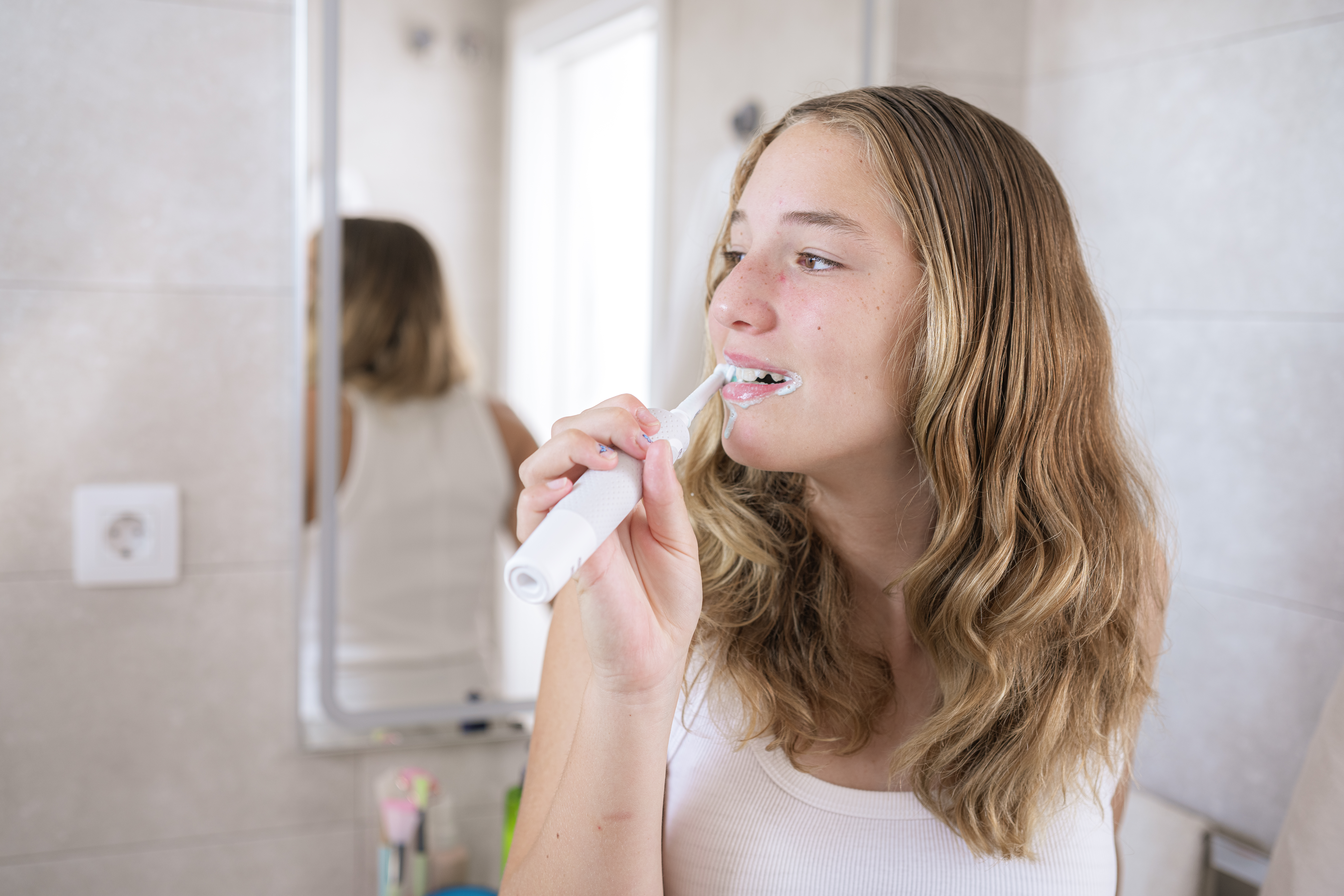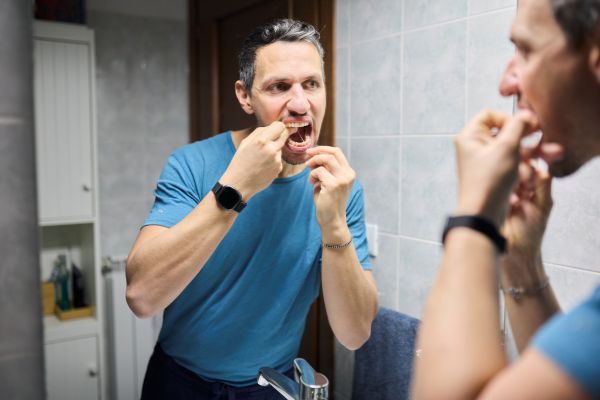
While brushing does a great job of cleaning the surfaces of your teeth, your toothbrush can’t always reach the tight spaces in between the teeth which is where plaque and food particles can build up.
Flossing, or interdental cleaning, can help protect your gums, lower your risk of tooth decay and help to keep your mouth clean and fresh. To floss properly, gently guide the floss between each tooth, curve it around the side of the tooth, and move it up and down along the tooth surface and just under the gumline. If you repeat this between all teeth, using a clean section of floss as you go, you’ll help keep your mouth clean and feeling fresh.
Here, Dr Ian Hedley, Principal Dentist at Sydney’s Mosman Dental Surgery, breaks down the steps to ensure you get the most out of your flossing.
Why is flossing important?
“Throughout the day, soft plaque accumulates on your teeth which is a colourless mix of bacteria, food particles and saliva,” says Dr Hedley. “If it’s not removed, plaque can calcify, harden and become calculus (or tartar).”
Tartar (or calculus) and plaque can increase the risk of tooth decay, gum disease and tooth loss, so it’s important to remove as much as possible.
“Brushing cleans the front, back, sides and chewing surfaces of your teeth, as well as much of the gumline,” says Dr Hedley. “However, toothbrush bristles can't effectively clean the narrow spaces between teeth.
“Flossing is designed specifically to clean these areas, removing plaque and food particles from in between teeth and slightly below the gumline.
“Think of brushing as cleaning the visible surfaces, while flossing reaches the hidden spaces. Doing both each day gives your mouth a much more complete clean than either one alone.”
Flossing can also help with bad breath (also called halitosis), gingivitis – a common type of gum disease and prevent cavities forming.
“Cavities don't just develop on the tops of teeth,” says Dr Hedley. “They can also form between teeth where plaque builds up.”
READ MORE: How to brush your teeth properly
How to floss your teeth correctly
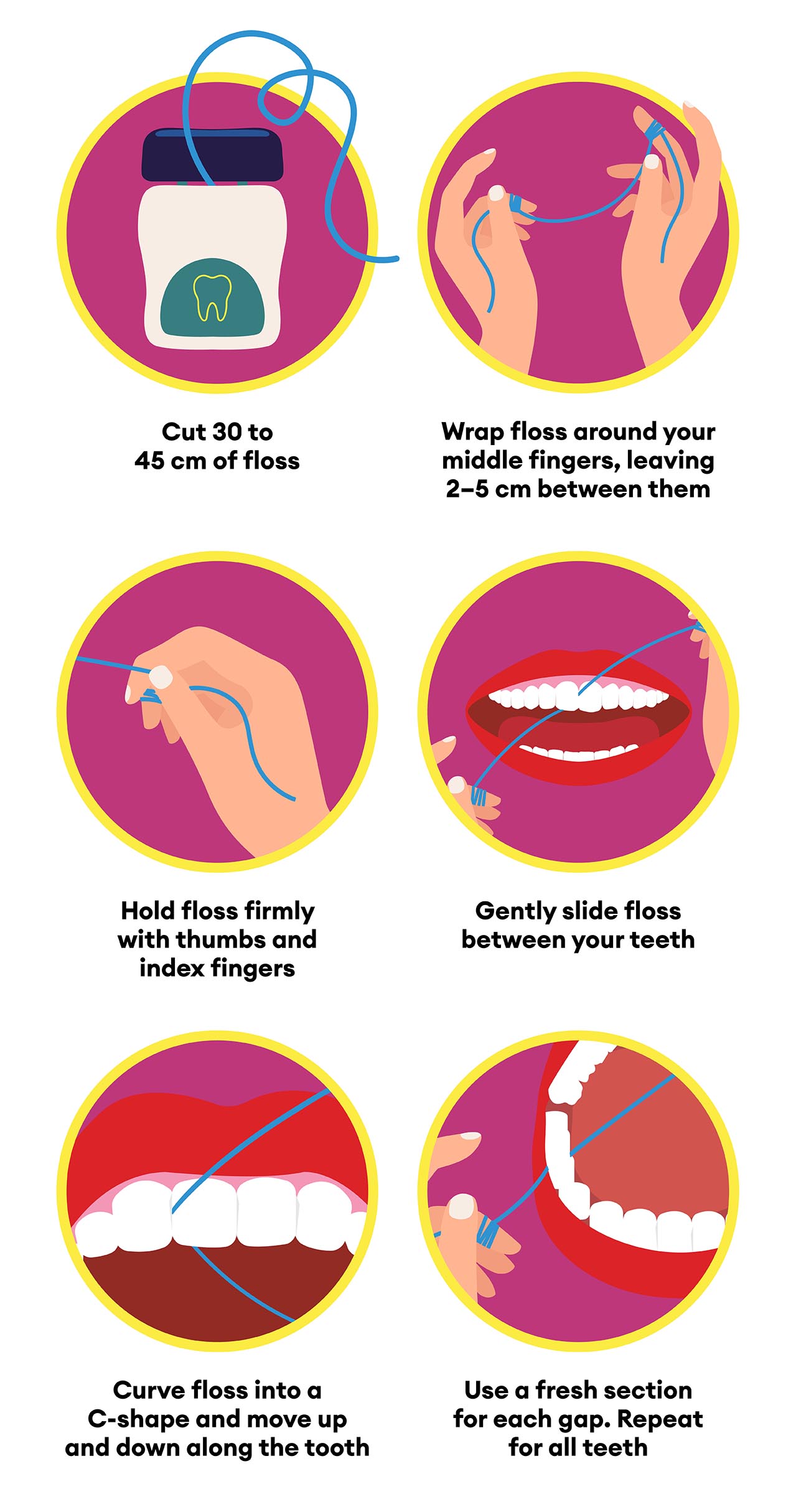
“Flossing doesn't need to take long,” says Dr Hedley. “Just a few minutes once a day can make a significant difference.”
He suggests following these steps to floss your teeth properly:
- Break off about 30cm (12 inches) of string floss.
- Wrap most of the floss around the middle finger of one hand, and the rest around the middle finger or your other hand, leaving around 2-5cm of floss at a time to work with.
- Hold the floss firmly between your thumbs and index fingers.
- Using a gentle up and down motion, guide the floss between your teeth. Avoid ‘snapping’ it down onto the gums.
- Curve the floss into a ‘C’ shape around one tooth and slide it gently beneath the gumline.
- Move the floss up and down several times against the side of the tooth.
- Repeat on the neighbouring tooth before removing the floss.
- Use a clean section of floss as you move from tooth to tooth.
How many times a day do I need to floss my teeth?
The Australian Dental Association recommends1 flossing at least once a day, although your dentist might advise you to do it more often, particularly if you have severe gum disease.
“The most important thing is to floss once every day, whenever it best fits into your routine,” says Dr Hedley.
“Many dental professionals recommend flossing in the evening before bed,” he adds. “Removing plaque and food debris before you sleep helps minimise the amount of bacteria left sitting on your teeth overnight.”
Should I floss before I clean my teeth or after?
Cleaning between your teeth before brushing may help remove trapped food and plaque more effectively, but Dr Hedley says consistency matters more than timing.
“The most important thing is to floss once every day, whenever it best fits into your routine,” says Dr Hedley. “Whether you floss before or after brushing is less important than making flossing a regular daily habit. Both approaches can be effective when done properly.”
How to floss your back teeth
Your back teeth can be tricky to reach, but with a little practice and patience, it can be done.
“If flossing feels awkward at first, don’t be discouraged,” says Dr Hedley. “Like any new skill, it becomes easier with practice.”
A floss pick (sometimes called a flossette) can work well as an alternative tool for those hard-to-reach places. “Floss picks hold a short piece of floss on a small handle,” explains Dr Hedley. “Many people find them easier to use, particularly when reaching the back teeth or when flossing on the go.”
Why does it bleed when I floss?
“If you’ve just started flossing, mild bleeding may occur because the gums are inflamed,” says Dr Hedley. “With regular gentle flossing, this often improves within a week or two. However, if bleeding persists, it’s worth seeing your dentist.”
Floss picks, water flossers, string floss: which is best?
Along with string floss, there are other types of flossing tools you can try and you can talk to your dentist about which flossing tool might be best for you.
Experimenting with different types to see which one you prefer, can be a good idea to help the flossing habit stick.
“There are several options available,” says Dr Hedley, “and the best one is often the one you’ll use consistently.”
String floss and tape floss
“Traditional string floss is highly effective when used correctly,” says Dr Hedley. “It works well for most people and provides excellent control around each tooth.”
There are a few options to choose from, including waxed and unwaxed. Tape floss is a slightly wider, flatter version of string floss, and works in a similar way.
“It’s very smooth, doesn’t fray, and is easy to use,” says Dr Hedley.
Floss picks or flossettes
With a small handle and curved top where the floss string sits, floss picks (or flossettes) can be effective for parents to use on their child’s teeth, people who struggle to use dental floss or young children learning to clean between their teeth.
Water flossers
“Water flossers use a stream of water to help remove food debris and reduce plaque around the gumline,” explains Dr Hedley. “They can be especially helpful for people who wear braces, have dental implants or bridges, have limited hand dexterity, or simply find traditional floss difficult to use.”
To use, start from the back teeth and move along to the front, holding the nozzle a few centimetres from the tooth. Hold there for two seconds on each tooth.
Interdental brushes
Interdental, or interproximal, brushes can be used instead of dental floss. They look like tiny bottle brushes and can clean the spaces between your teeth.
They’re also useful for cleaning under bridges, around crowns, and between exposed tooth roots where the gums might have receded.
To use an interdental brush, gently slide it into the space between two teeth and move it back and forth until the area feels clean.
Consistency matters
Remember, regularly brushing, flossing and having scheduled dental check-ups are often the best approach when it comes to taking care of your teeth, and overall oral health.
“Healthy teeth and gums are built through small, consistent habits rather than occasional deep cleans,” says Dr Hedley. “Even spending just a few minutes each day cleaning between your teeth can make a meaningful difference to your long-term oral health and help keep your smile healthy for years to come.”
READ MORE: How often should you get you teeth cleaned?